What Are Ronghe Dou? A Beginner's Guide to Chinese Fuse Beads
Ronghe dou is a Chinese term often used for fuse beads, and sometimes for flexible beads used in charms and 3D projects. This guide explains the meanings, materials, sizes, and beginner buying tips.
BeadsHub Studio
Author
What are ronghe dou?
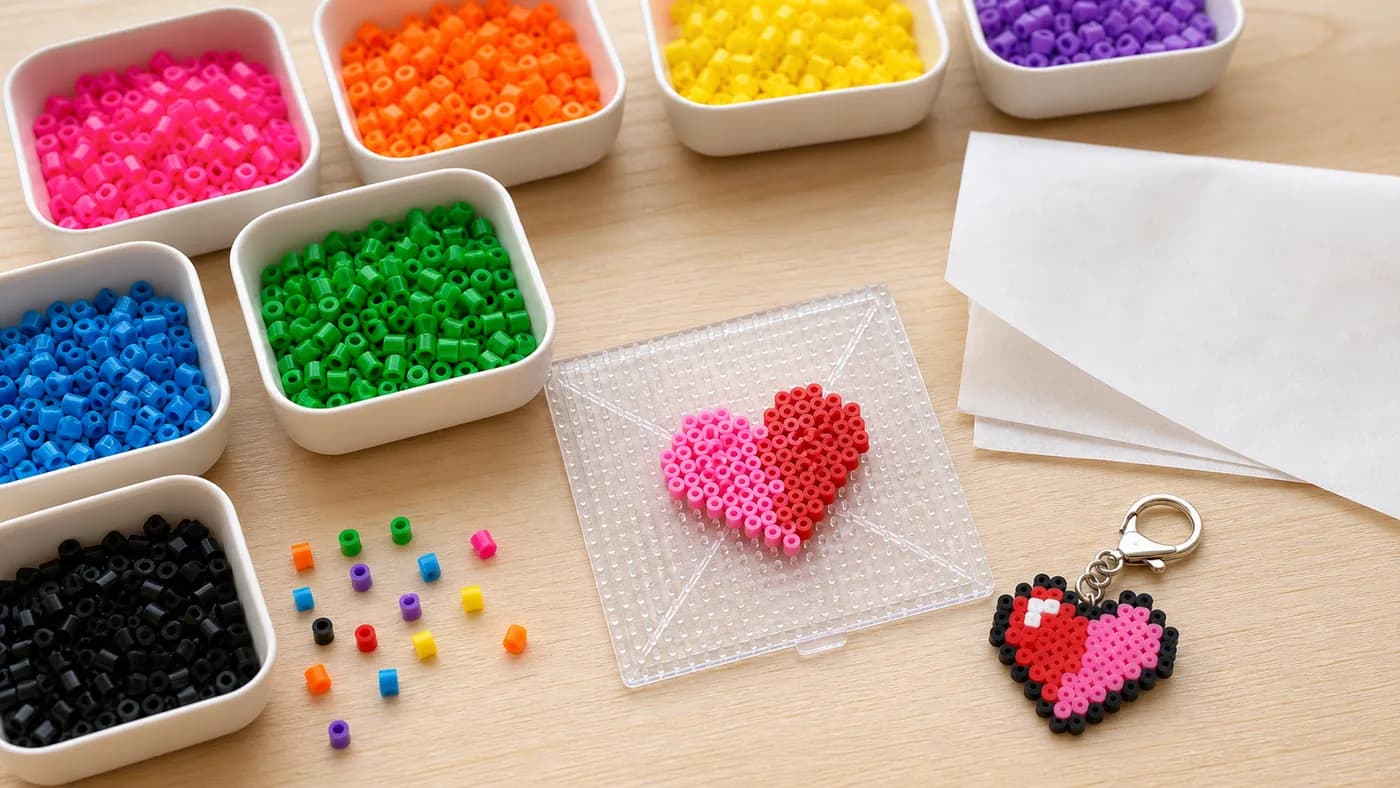
Ronghe dou (融合豆) is a Chinese term that usually refers to small plastic beads that can be arranged on a pegboard and fused together with heat. In English, the same craft is usually called fuse beads, iron beads, Perler beads, or Hama beads.
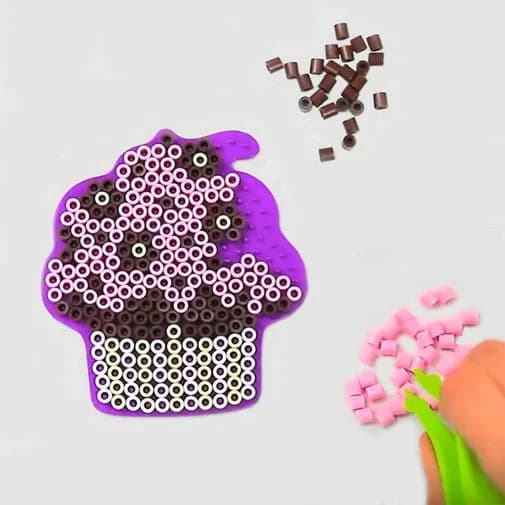
The basic idea is simple: one bead works like one pixel. You place beads on a pegboard, follow a pattern, cover the design with ironing paper or parchment paper, and gently heat it with an iron. The bead edges soften and connect. After cooling, the loose beads become one finished piece.

If you are new to the craft, the name matters less than the practical details: bead size, pegboard compatibility, melting behavior, flexibility after ironing, and whether the beads fit the project you want to make.
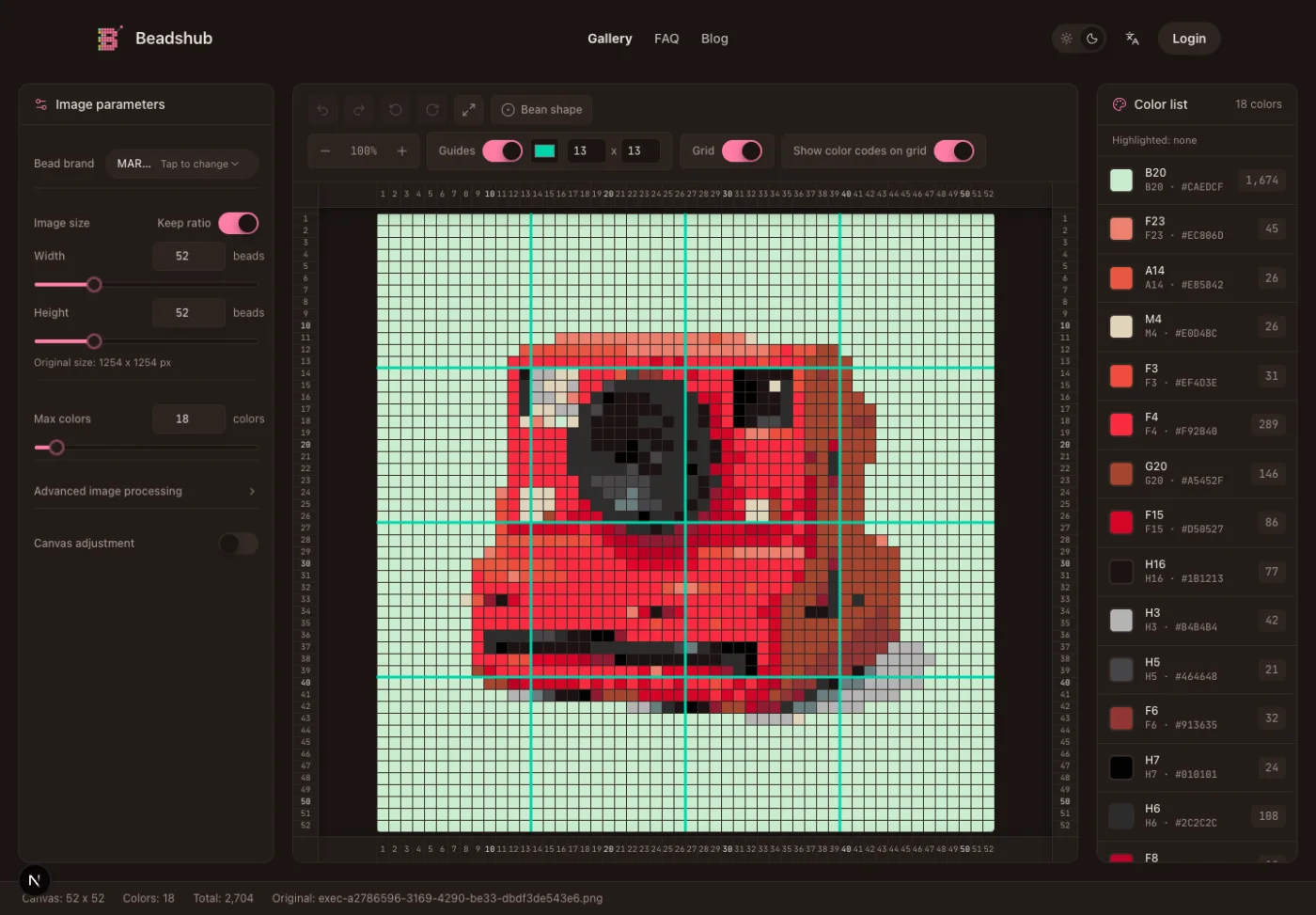
For a first project, browse the BeadsHub pattern gallery. If you want to turn a photo, avatar, pet picture, or illustration into a bead pattern, try the Perler bead pattern maker.
The two common meanings of ronghe dou
Online, ronghe dou is not always used in one strict way. You will usually see two meanings.
The broad meaning is simple: ronghe dou means heat-fusible beads. In marketplace listings, titles such as "Fuse Beads Ronghe Dou" or "2.6mm Perler Beads Ronghe Dou" usually mean small plastic craft beads that can be melted together with an iron.
The narrower hobby meaning is more specific. Some Chinese-speaking crafters use ronghe dou to distinguish a more flexible bead from hard beads and soft beads. In this sense, ronghe dou often suggests a finished piece with better toughness, especially after one-sided ironing. That flexibility can be useful for keychains, bag charms, and 3D bead structures.
Both usages appear in real shops and craft communities. That is why beginners should read the product details instead of trusting the title alone. Look for size, material notes, compatible pegboards, ironing examples, reviews, and whether the seller says the beads are suitable for charms or 3D work.
How do ronghe dou fuse?
The process is basically hand-built pixel art.

First, place tube-shaped beads onto the pegs of a pegboard. One square in the pattern becomes one bead on the board. Once the design is complete, cover it with ironing paper or parchment paper. Use low to medium heat and move the iron gently. The bead surfaces soften, and neighboring beads connect at the edges. After cooling, you can lift the piece from the board.
Three details matter:
- You are not trying to liquefy the beads. Light fusion is enough. Too much heat closes holes and warps edges.
- Always use a paper layer. Never place a hot iron directly on exposed beads or a bare plastic pegboard.
- Let the piece cool flat. Warm fused beads are soft and bend easily.
Results vary by iron, pressure, bead size, brand, batch, and whether you iron one side or both sides. Even if two products are both called ronghe dou, they may melt differently. Whenever you use a new bead type, make a tiny 5x5 test swatch before ironing a real project.
Hard beads, soft beads, and flexible ronghe dou
Chinese bead crafters may talk about hard beads, soft beads, and ronghe dou as separate types. The exact naming is not perfectly standardized across shops, but this comparison is a useful starting point.
| Type | Common feel | Best for | Beginner note |
|---|---|---|---|
| Hard beads | Firmer after ironing, more brittle when bent | Flat art, display pieces, practice patterns | Often cheaper, but not ideal for pieces that bend |
| Soft beads | Softer finished feel | Coasters, flat decorations, simple panels | Check whether they fuse strongly enough |
| Flexible ronghe dou | Often described as tougher and slightly bendable | Keychains, charms, 3D builds, pieces handled often | Meanings vary by seller, so test before buying in bulk |
If you are making a framed flat design, a harder bead may be completely fine. If you are making a keychain, phone charm, bag charm, or interlocking 3D model, toughness matters more because the finished piece will be touched, pulled, or bent.
Softer is not automatically better. Beads that are too soft may feel less crisp while placing or may produce less clean edges after ironing. Beads that are too hard can snap at thin connections. The safest beginner strategy is to buy a small amount first, make a test piece, and only then buy more colors.
How should beginners choose ronghe dou?
Start with size. The two common sizes are regular 5mm beads and 2.6mm mini beads.
Regular 5mm beads are friendlier for beginners. They are easier to see, easier to pick up, and easier to place. Pegboards and tools are also more common. They work well for coasters, fridge magnets, simple decorations, beginner pixel art, and small charms. For your first few designs, choose something around 20x20 to 30x30 beads.
Mini 2.6mm beads create finer details. They are great for earrings, tiny charms, badges, and detailed small artwork. But they are harder on your eyes and hands, require better lighting and tools, and are less forgiving during ironing.
Then think about the final object:
- Practice project: 5mm beads, few colors, small pattern.
- Coaster or wall art: either size can work; focus on flatness and even ironing.
- Keychain or charm: choose tougher beads and reinforce the hole area.
- 3D model: test tab strength, slots, and connections before making a large build.
- Gift or product: keep the brand and batch consistent to avoid color shifts.
You do not need every color at once. Start with high-use basics: black, white, gray, red, yellow, blue, green, brown, and skin tones. Add mid-tones and shadow colors later based on the patterns you actually make.
Why mixing different beads is risky
Beginners often mix beads from different brands, batches, or materials because the colors look similar. Placement may be fine, but ironing can reveal the problem.
Different beads soften at different speeds. In one piece, some beads may be over-melted while others are barely connected. The result can be uneven texture, weak seams, loose edges, or a piece that breaks at thin points.
Size mixing is also a problem. Regular 5mm beads and 2.6mm mini beads do not belong on the same pegboard. The peg spacing and bead diameter are different, so the finished design will not align cleanly.
Similar colors can also look different in real light. Two "skin tone" or "light brown" beads may have different warmth, opacity, or shine. That difference becomes obvious on faces, pet fur, and smooth gradients.
If you must mix beads, test first. Place several bead types in one small strip, iron them exactly as you would iron the final design, let them cool, then bend and inspect the result. Use the mix only if the test piece is strong and visually acceptable.
What projects are ronghe dou good for?
Ronghe dou are best for designs with clear pixel structure, readable outlines, and enough contact between beads to hold the shape after ironing.

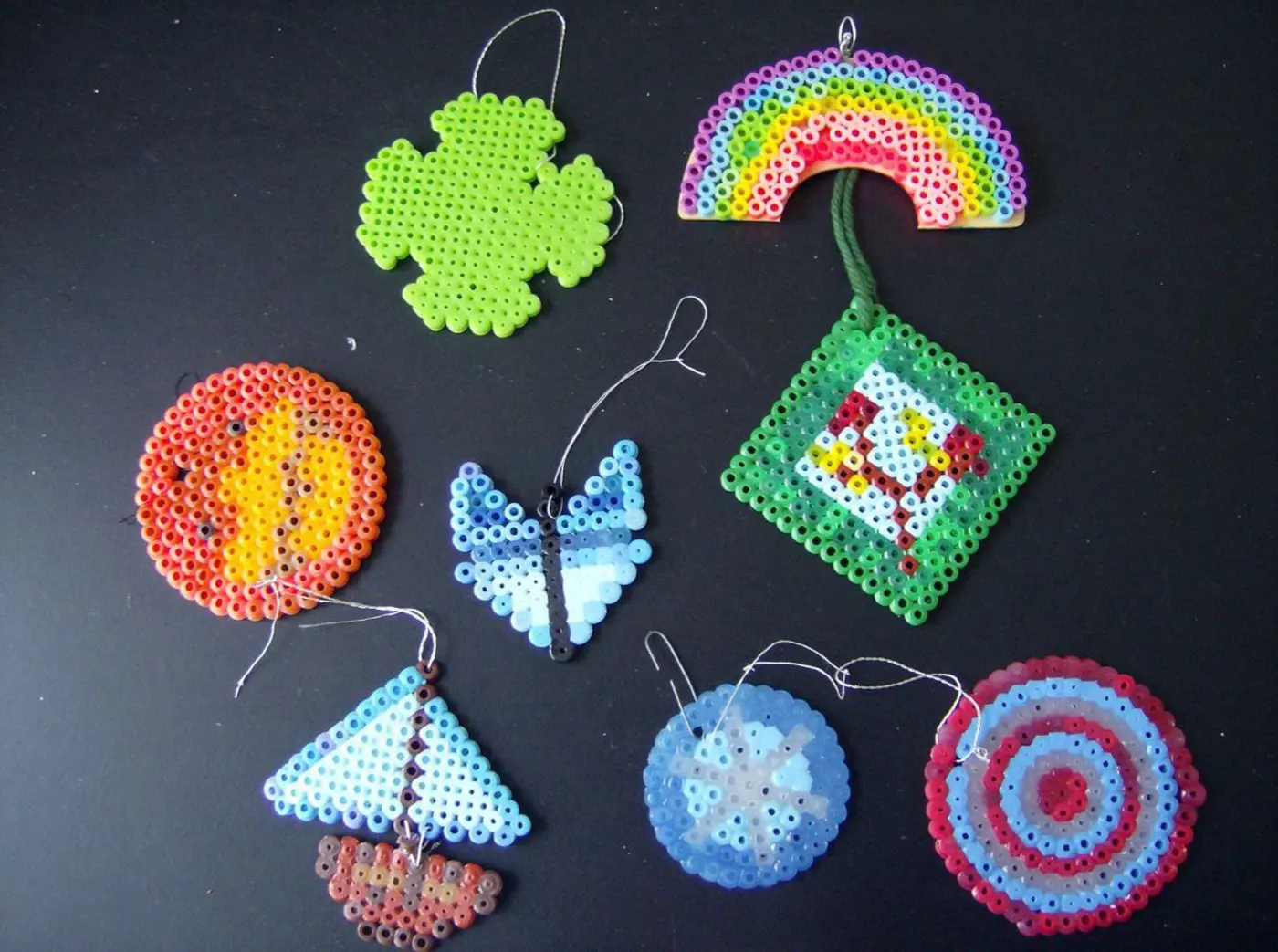
Beginner-friendly ideas include:
- Hearts, stars, fruit, and flowers
- Game icons and small animal sprites
- Fridge magnets, coasters, and small decorations
- Name tags, keychains, and bag charms
- Small anime-style faces or pet portraits
Harder first projects include:
- Very large full-body character art
- Photos with complex backgrounds
- Illustrations with many close gradients
- Thin shapes connected by only one or two beads
- Complicated 3D models with precise slots
These projects are possible, but they demand better pattern design, bead consistency, ironing control, and structural planning. It is better to learn the full workflow on a small piece first.
When using BeadsHub, crop the image to the main subject, reduce unnecessary background, limit the color count, and manually fix eyes, mouths, outlines, and weak connections. A good bead pattern is not only pretty on screen; it must be buildable on a real pegboard.
Ronghe dou buying checklist
Before ordering, check these details:
| Check | What to confirm |
|---|---|
| Size | Regular 5mm or 2.6mm mini beads |
| Pegboard fit | The matching pegboard size is clear |
| Material wording | Whether the listing says hard, soft, flexible, EVA, or another material |
| Ironing behavior | Reviews mention strength, brittleness, warping, or easy fusing |
| Color system | There are stable color names or numbers |
| Refills | Common colors can be bought separately |
| Bead quality | Edges are smooth and beads are evenly shaped |
| Project use | The beads are suitable for charms, 3D work, or children's crafts as needed |
Be careful with listings that say "ronghe dou" but do not provide size, material, compatible pegboard, or ironing details. For long-term crafting, refillable single colors are more valuable than one giant mixed bag. Black, white, gray, brown, and skin tones run out quickly.
Your first ronghe dou workflow
Try this calm first workflow:
- Choose a simple 20x20 to 30x30 pattern.
- Use beads from the same brand and size.
- Place the pegboard on a flat table.
- If using a clear pegboard, put the pattern underneath.
- Build the outline first, then fill the inside colors.
- Check wrong colors, missing beads, and tilted beads as you go.
- Cover the design with ironing paper or parchment paper.
- Use low to medium heat and move the iron gently.
- Stop once the bead surfaces are lightly fused.
- Press the piece flat while it cools.
- Lift it from the board, then lightly iron the back if needed.
This may sound slow, but it protects the part beginners most often ruin: ironing. Once beads are overheated, warped, stuck to paper, or melted too flat, they are hard to rescue. Start conservative and increase heat only after testing.
FAQ
Are ronghe dou and fuse beads the same thing?
In many contexts, yes. Ronghe dou is often the Chinese term used for heat-fusible beads. In some hobby contexts, it can also mean a more flexible type of bead used for charms and 3D work.
Are ronghe dou always better than hard beads?
No. Flat display art may not need flexible beads. Charms, keychains, and 3D builds benefit more from toughness.
Should beginners buy 5mm or 2.6mm beads?
Start with 5mm if you are completely new. Mini beads look refined, but they are harder to place and iron.
Can I mix different brands of ronghe dou?
Avoid mixing unless you test first. Different beads can melt at different temperatures and create weak or uneven finished pieces.
Are fuse beads safe for children?
Buy clearly labeled craft beads from reputable sources, keep small beads away from very young children, and have an adult handle all ironing. Work in a ventilated area and do not overheat plastic.
Can BeadsHub make ronghe dou patterns?
Yes. Use the Perler bead pattern maker to turn images into grid patterns, or start from the pattern gallery. Once the pattern is ready, match it to the bead size and colors you own.
Quick recap: Ronghe dou usually means heat-fusible bead material for pixel-style crafts. The important beginner choices are size, flexibility, brand consistency, and project fit. Start small, avoid mixing untested beads, and test your ironing before making the real piece.