Hama Beads Halloween: 9 Ideas from Official Patterns
Choose a Hama Halloween project by difficulty, board shape, palette, and display style using official pattern sources.
BeadsHub Studio
Author
A good Hama beads Halloween project starts with the finished use. A pumpkin on one small board is an easy afternoon build; a bat needs more diagonal control; a skeleton lantern combines several pieces and needs a display plan.
This guide organizes nine ideas visible in Hama's own Halloween material by difficulty, pegboard shape, palette, and display. It does not reproduce or sell Hama's pattern files. Use the source links to obtain official patterns and check the manufacturer's materials.
Source and copyright note
Hama is a trademark of Malte Haaning Plastic A/S. The product and project images belong to Hama and appear here for editorial reference with source links. BeadsHub is not affiliated with Hama and does not claim ownership of the designs.
Download original files only from the Hama Halloween scene page, the Hama Inspiration area, or another Hama-operated page. Product contents and availability can change.
Choose a Halloween project quickly
Match the project to the board and display you have. These are practical starting points; follow the board in the official pattern when one is supplied.
| Idea | Starting difficulty | Practical board choice | Core colors | Display option |
|---|---|---|---|---|
| 1. Jack-o'-lantern | Beginner | Small square | Orange, black, green, white | Magnet or table decoration |
| 2. Friendly ghost | Beginner | Small square | White, black, optional gray | Window hanging |
| 3. Compact bat | Beginner | Small hexagonal | Black, yellow, red | Garland or gift tag |
| 4. Witch hat | Intermediate | Small hexagonal | Black, purple, yellow, gray | Hanging ornament |
| 5. Striped spider | Intermediate | Small square or hexagonal | Black, white, gray, red, yellow | Wall cluster |
| 6. Skull face | Intermediate | Large square or round | White, black, brown | Lantern insert |
| 7. Bone garland | Intermediate | Small square sections | White, gray, red accent | Vertical garland |
| 8. Skeleton lantern | Advanced | Mixed boards | White, black, brown | Lighted outdoor decoration |
| 9. Coordinated Halloween set | Advanced | Square plus hexagonal | One shared five-color palette | Party backdrop |
The official 4,000-bead Halloween tub includes small square and hexagonal boards, a design sheet, beads, and ironing paper. Hama lists it for ages five and above, with adult ironing required.
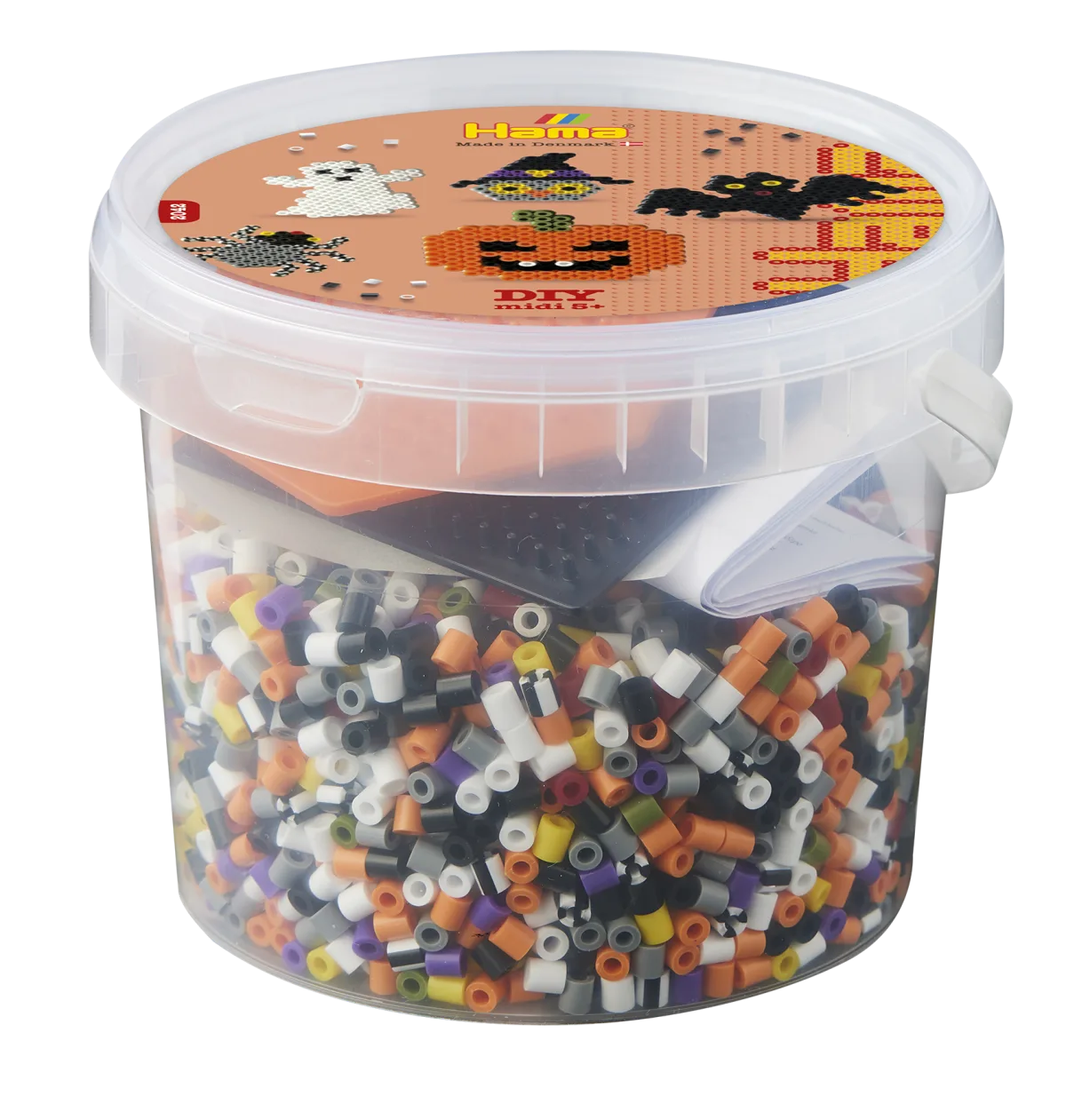
Source: Hama official Beads and pegboards in tub - Halloween page. Product image shown for editorial reference.
Beginner Hama beads Halloween ideas
1. Jack-o'-lantern with a readable face
A pumpkin is forgiving because the orange silhouette remains recognizable even if a few edge beads move. Build the outline and green stem, reserve the black face, then fill orange. Keep mouth connections at least one bead thick and avoid isolated teeth attached at only one point.
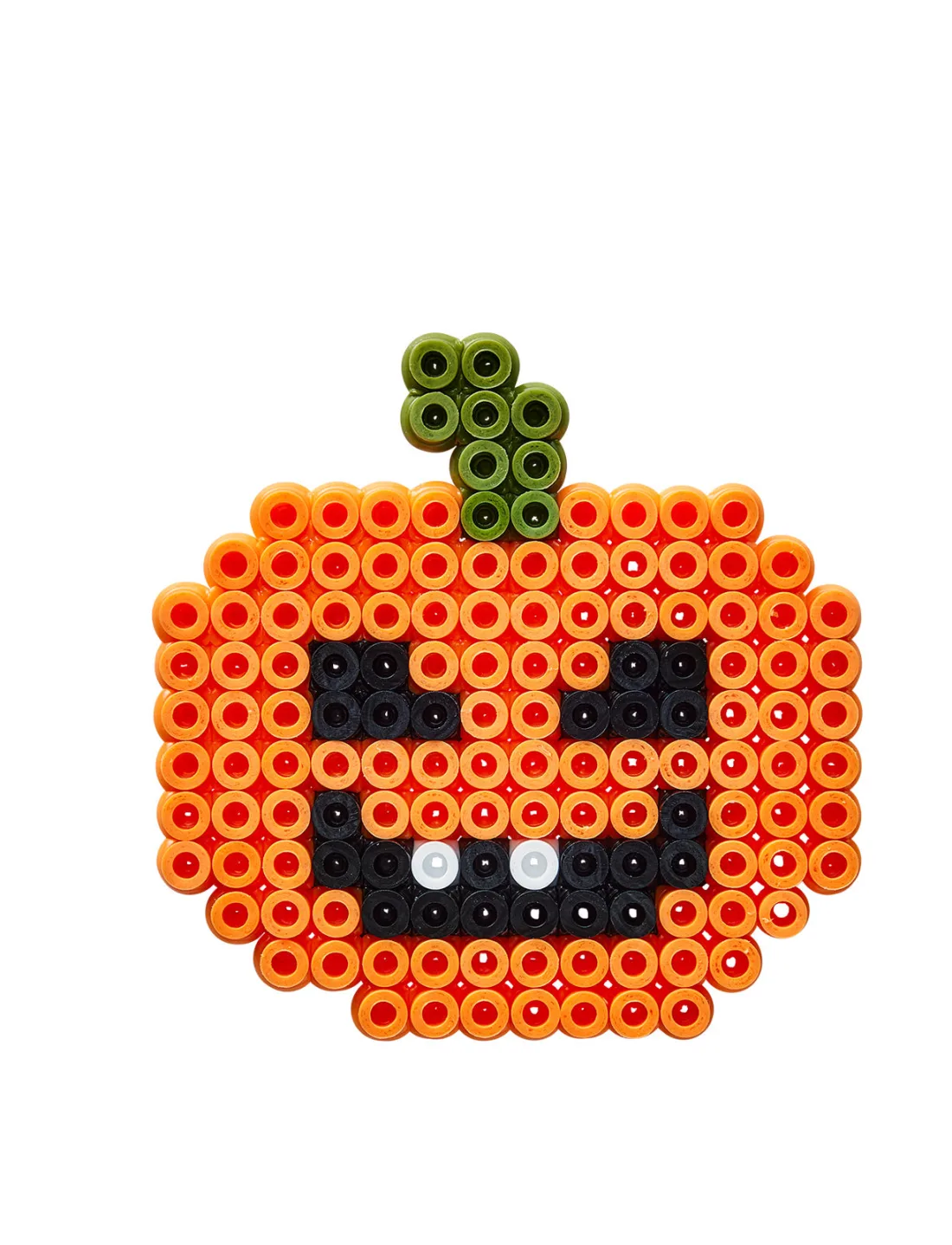
Source: Hama official 4,000-bead Halloween tub page. Finished design shown for editorial reference.
2. Friendly white ghost
Use white for the main mass and black for two eyes and a mouth. Give the ghost two or three short lower tails instead of a flat edge. Lay the face first, build the body around it, and add light gray only when it separates an arm or fold.
3. Compact black bat
The official set imagery places the bat on a small hexagonal board, whose angled sides suit stepped wings. Start at the face, mirror the main span, and use yellow eyes plus one red mouth bead as the focal point. Connect each wing to the body by several beads so it does not bend after fusing.
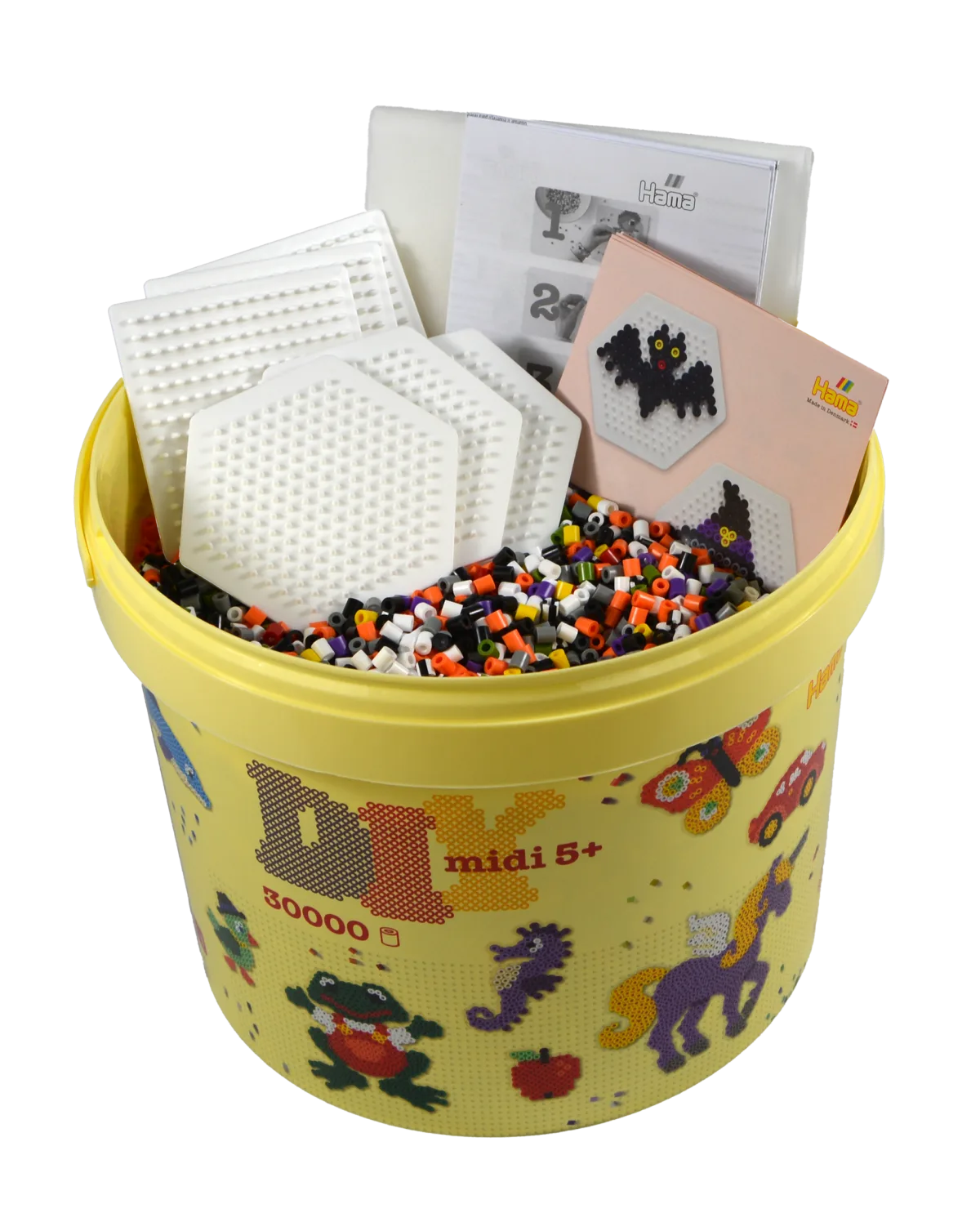
Source: Hama official 30,000 Midi beads Halloween bucket page. Product image shown for editorial reference.
Intermediate motifs with more edge control
4. Witch hat on a hexagonal board
A witch hat combines a wide brim, narrow crown, and bent tip. Place the brim first and build upward, keeping every step connected. Purple separates the crown from the black outline; yellow or gray can define the band. Mark the vertical center before matching the two sides.
5. Striped spider with durable legs
The official spider uses a compact body and striped legs. Build the body and eyes first, then add legs in opposing pairs so adjacent legs do not merge. Treat each leg as a connected chain and reinforce direction changes if the piece will hang rather than lie flat.
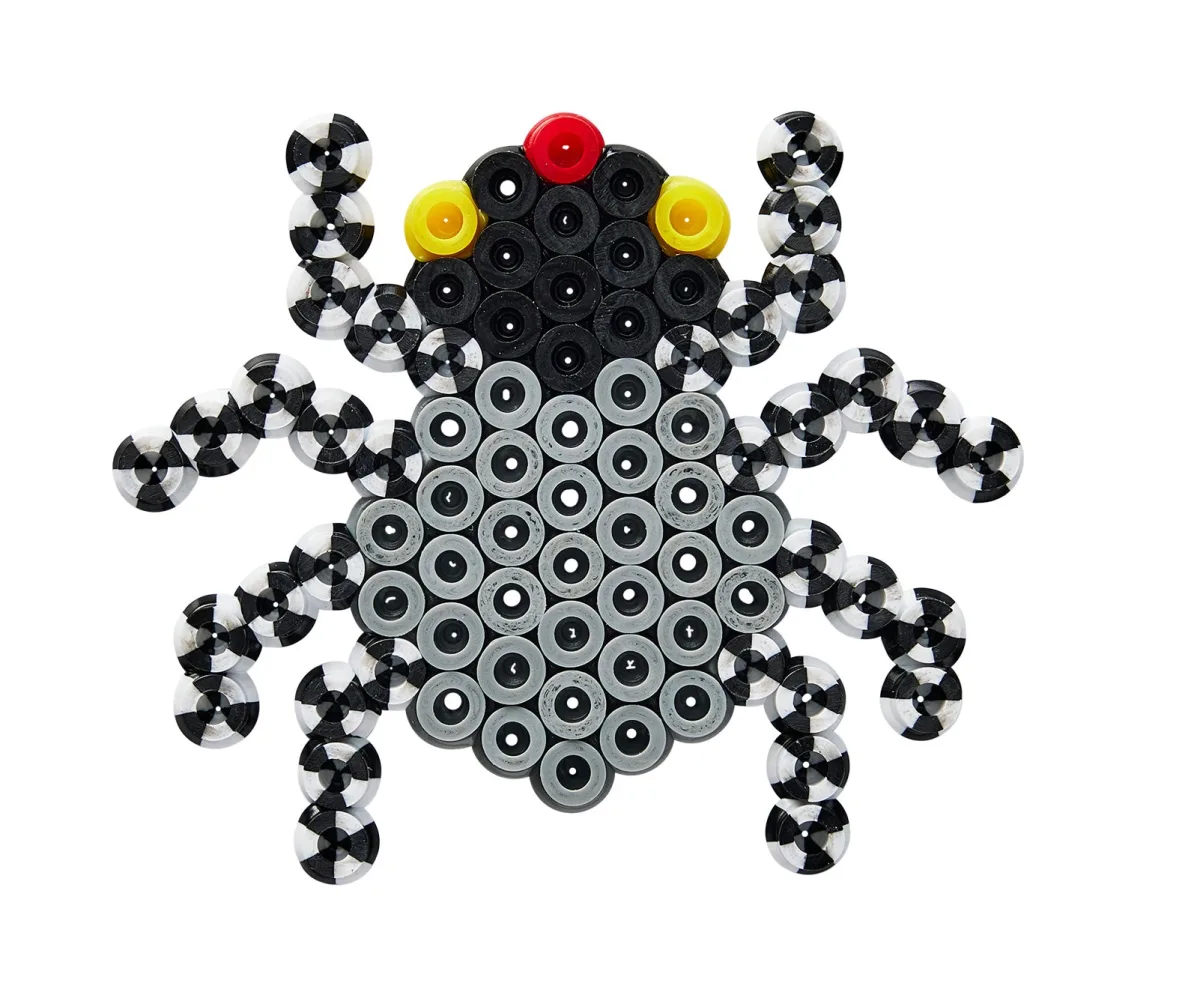
Source: Hama official 4,000-bead Halloween tub page. Finished design shown for editorial reference.
6. Skull face for a lantern
A skull reads through large eye sockets, a small nose opening, and a separated mouth. Plot those spaces before filling the pale face. Dry-fit fused parts around the unlit lantern before attachment. Use an LED only; keep fuse beads, cord, and adhesive away from candles or open flames.
Advanced display projects
7. Vertical bone garland
Small bones are quick, but a garland needs consistent attachment points. Make one test bone and confirm where cord can pass without splitting the end. White and gray read clearly against a dark background; keep any red accent small.
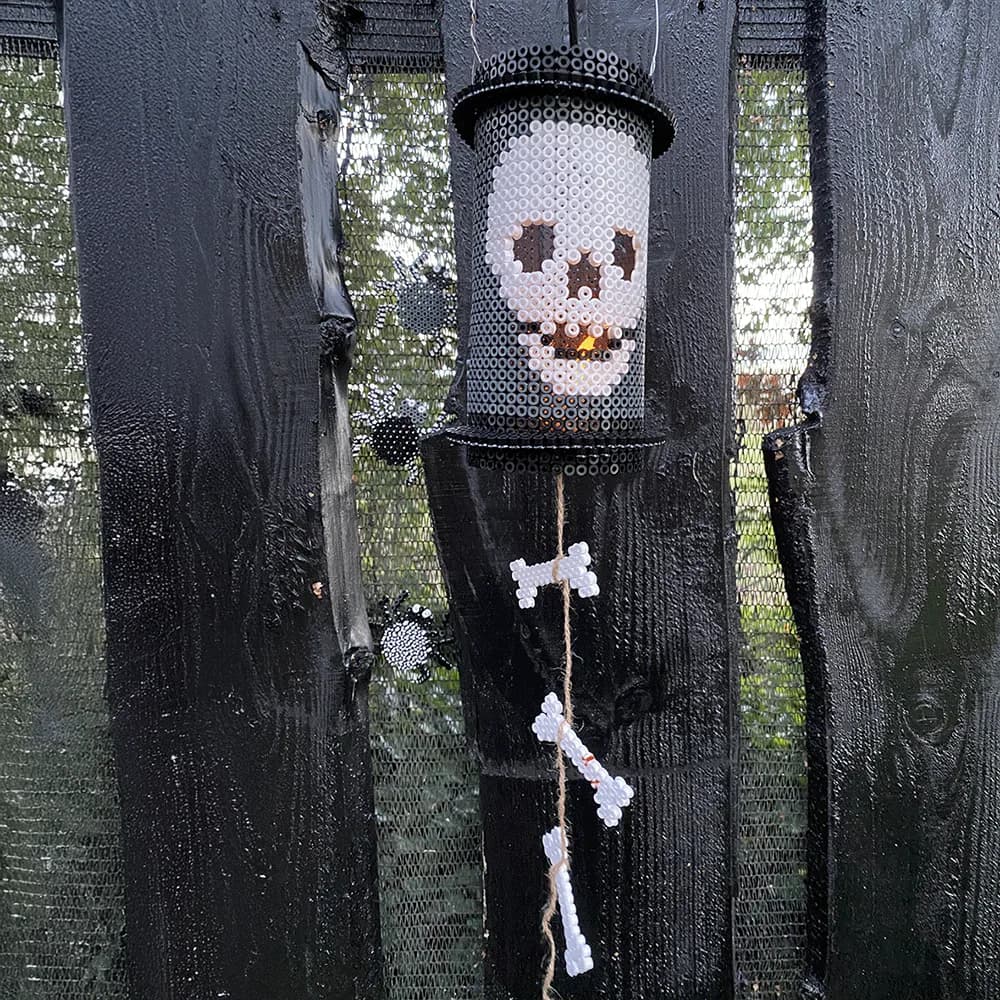
8. Skeleton lantern assembly
The Hama Halloween scene lists medium hexagonal, large round, and large square pegboards among its materials. That mixed-board requirement is a useful warning: the display is an assembly project, not one flat motif.
Plan the container, hanging point, cord path, and LED access first. Cool each panel under a flat weight and test the fit before assembly. Follow the light manufacturer's ventilation instructions.
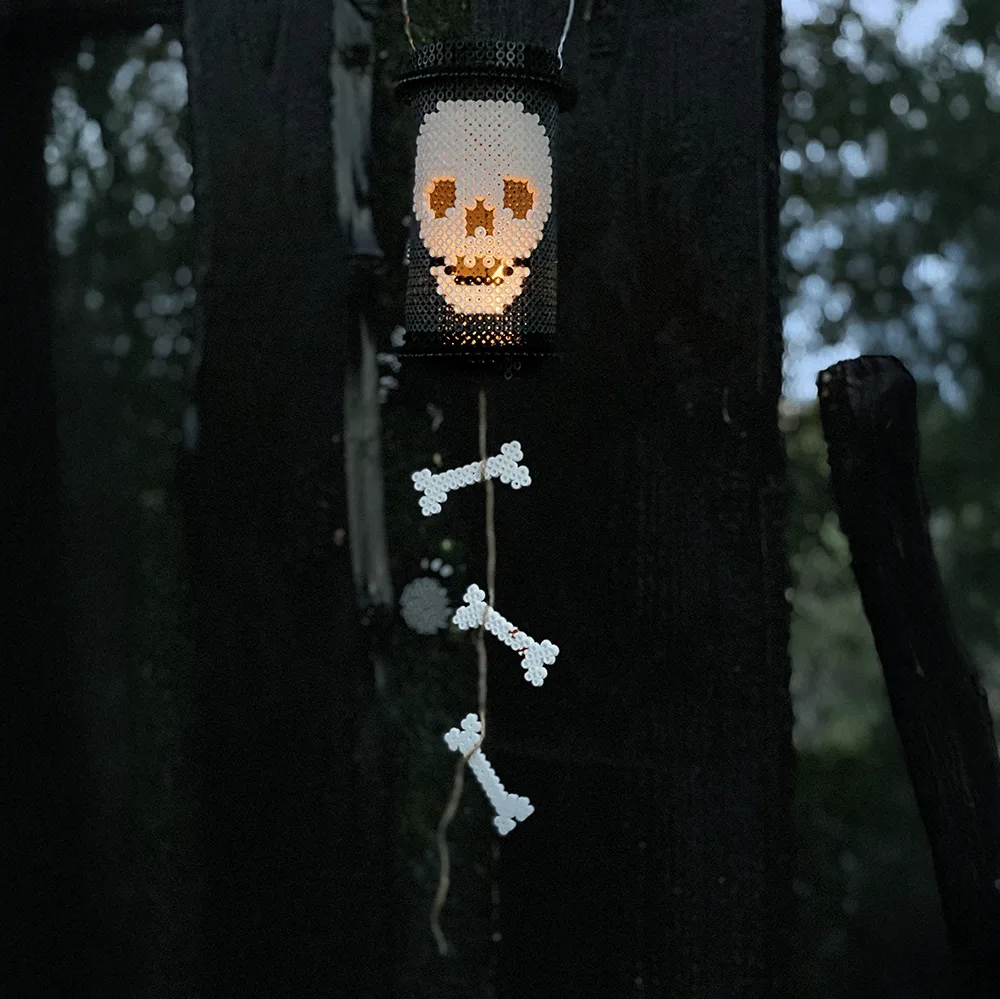
Source: Hama official Halloween scene page. Completed project photo shown for editorial reference.
9. One coordinated Halloween set
Choose one shared palette for a ghost, pumpkin, bat, hat, and spider. Black and white provide structure; orange marks the pumpkin; purple distinguishes the hat; green or yellow becomes the accent. Arrange a large light motif near a dark one, then fill gaps with smaller pieces. Photograph the layout before attaching hooks.
Plan a five-color Halloween palette
For most Hama beads Halloween motifs, begin with black, white, orange, purple, and green or yellow. Black defines outlines, white carries ghosts and bones, orange owns the pumpkin, and purple differentiates magical subjects. Reserve the accent for eyes, stems, or buckles.
Count the dominant colors from the official reference before opening mixed bags. The official 30,000 Midi Halloween bucket states that it includes beads, square and hexagonal boards, design sheets, ironing instructions, and paper. If you already own boards, compare the colors you have with Hama's current official color chart instead of trusting a screen alone.
Screen color is not a physical match. Sort similar dark shades under neutral light and retain any official color numbers.
Fuse and display the pieces safely
Hama's instructions say to place the beads, cover them with ironing paper, have an adult fuse them with a household iron, and remove the finished design from the reusable board. Follow the kit instructions instead of a universal temperature guess.
For a more detailed workflow, use the guide to ironing fuse beads. It explains even iron movement, cooling under weight, and how to avoid warped edges. The Perler bead tools guide covers paper, tweezers, storage, and other setup choices that also apply to Hama-style fuse-bead work.
Choose attachments after cooling. Removable adhesive suits light wall pieces, magnets suit compact motifs, and cord needs a reinforced opening. Never hang an assembly from a one-bead corner.
Where to get the official Hama patterns
Start with the Hama Halloween scene, which is labeled as a free pattern page and lists its materials. Then check the current Hama Inspiration page for downloadable patterns. The two official Halloween kit pages linked above are useful for confirming board shapes, included materials, and the manufacturer's real project imagery.
Do not treat a small product preview as a complete printable pattern. Use it to choose a project, then follow the official download or design sheet. If you want to plan an original variation from your own sketch, the BeadsHub pattern maker can help reduce an image to a counted fuse-bead grid, but it does not provide Hama's copyrighted pattern files.
Hama beads Halloween FAQ
Are these free Hama patterns hosted by BeadsHub?
No. BeadsHub does not host or claim ownership of Hama's pattern files. Follow the source link for the current official download and terms.
Which project is easiest for a beginner?
Start with the jack-o'-lantern or friendly ghost. Both use a strong silhouette, few colors, and a small square-board layout. The bat is also compact but has more diagonal wing edges.
Can I use Perler beads with a Hama pattern?
Both are fuse-bead systems, but board fit, bead dimensions, color codes, and fusing behavior can differ. Do not mix brands on a project until you have tested the actual beads and board together.
How many colors do I need?
Three colors are enough for a simple ghost, pumpkin, or bat. Five colors create a coordinated set with black, white, orange, purple, and green or yellow. Add gray or brown only when it improves separation.
The strongest Hama beads Halloween plan is not the one with the most pieces. Choose a motif that fits the board and display, get the original instructions from Hama, and test one small component before committing to a lantern or full party set.